What if the biggest risk to your closing date in Dexter isn't your credit score or your down payment, but a water test that takes three weeks to come back?
That's the trade nobody explains up front. Dexter sits inside a stretch of Laurens County where nearly every buyer qualifies for a mortgage that requires no down payment at all. That sounds like the whole story. It isn't. The same federal backing that erases your down payment also means the lender has to confirm the property's well and septic system actually work before anyone signs at the closing table, and that confirmation runs on county health department time, not lender time. USDA loans typically move from application to closing in 30 to 60 days, and in a town where a $106,740 median home price practically guarantees you're financing with USDA, whether your file lands on the fast end or the slow end of that range usually comes down to how quickly the well and septic paperwork clears.
The Loan Almost Everyone Here Already Qualifies For
Laurens County is essentially 100 percent covered by USDA's Rural Development loan program, which means most properties in and around Dexter are eligible for zero-down financing. The income limits back this up. USDA raised its standard nationwide income caps for the Single Family Housing Guaranteed Loan Program effective July 13, 2026, and outside a handful of high-cost metro areas, the limit is now $122,800 a year for a household of one to four and $162,100 for a household of five to eight. Laurens County isn't one of the higher-cost exceptions, so those are the numbers that apply here. Dexter's median household income sits at roughly $34,141, which puts nearly every household in town under both thresholds with plenty of room to spare. This isn't a program for the exception. It's the default financing path for the town.
The numbers across Laurens County confirm it. There are 176 USDA-backed loans on the books countywide, with an average loan balance of $108,758 and a typical appraised value of $110,097 on homes averaging 1,754 square feet. Compare that to Dexter's own median price of $106,740 and the pattern is obvious: the math on a typical Dexter house and the math on a typical USDA-financed house in this county are nearly the same house. Eighty-one percent of those loans went to first-time buyers, which tracks with what a zero-down, income-qualified product is built to do.
USDA loans also let the seller cover the buyer's closing costs, which in a market this size often means a buyer can move in with almost nothing out of pocket beyond earnest money. That's a real advantage, and it's one most buyers don't ask about until an agent brings it up.
The Part That Slows the Deal Down
Here's the trade nobody mentions when they're excited about zero down. A government-backed loan, whether USDA, FHA, or VA, doesn't just underwrite your income. It requires the property itself to meet minimum safety and sanitation standards before the loan can close. For a subdivision home on city water and sewer, that's rarely an issue. For a Dexter property on a private well and septic system, which describes most of the housing stock here, it means someone has to document that both systems are functioning before the lender will sign off.
Georgia doesn't require a septic inspection by law at the point of sale. But that legal gap doesn't matter much in practice, because FHA, VA, and most conventional lenders require proof of a working system anyway, and USDA-guaranteed loans follow the same general logic. If the property relies on a well, the lender typically wants a water test too. The state doesn't force the check. The loan does.
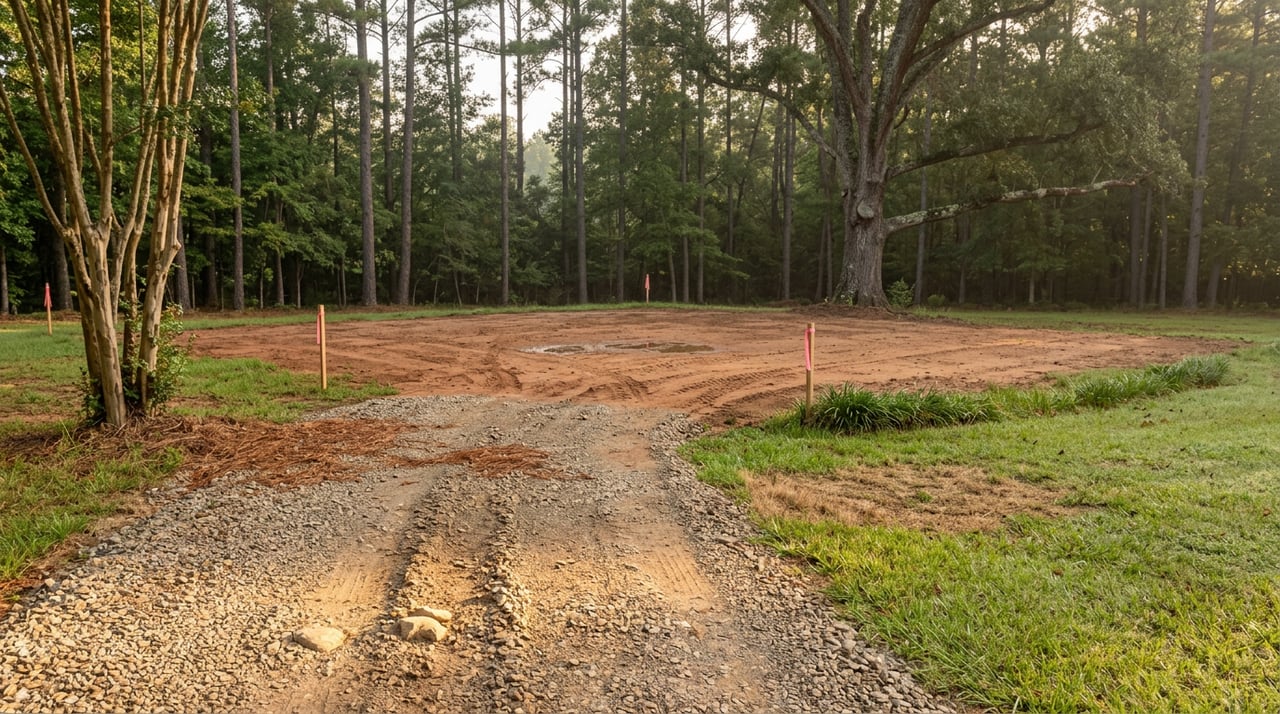
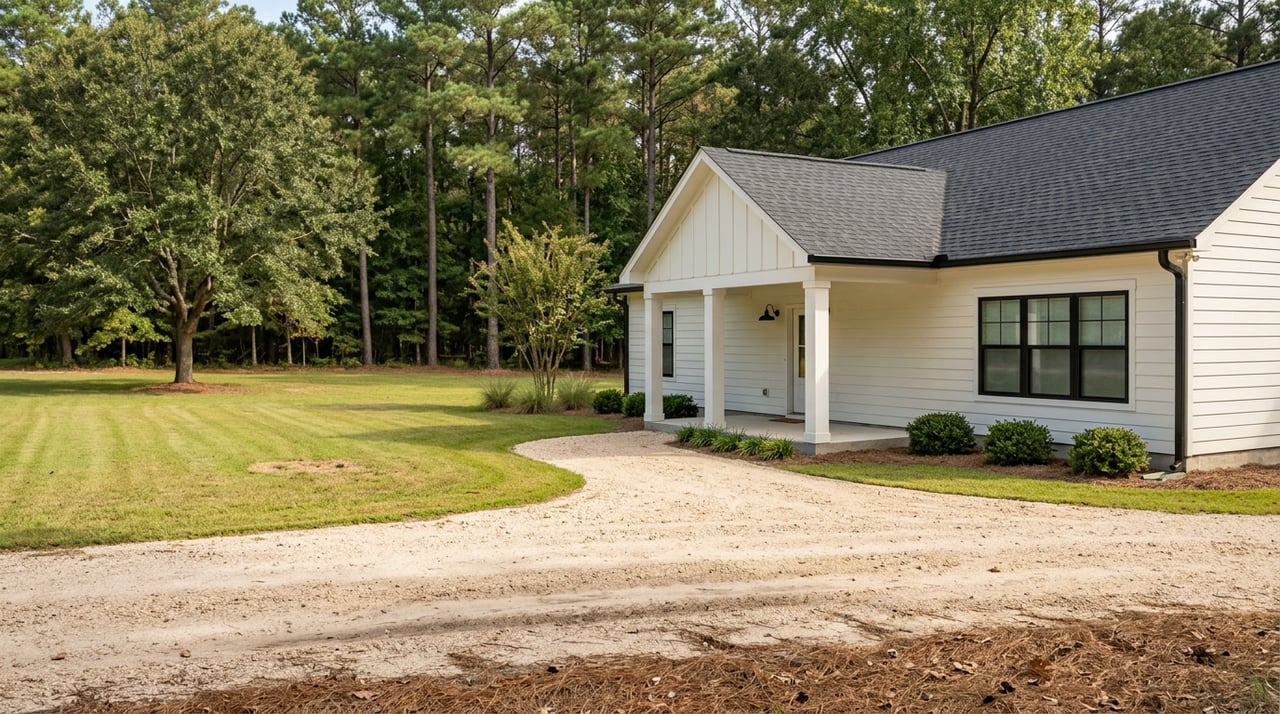
A quick look at current listings in the Dexter and Rentz area shows how baked-in this is. Acreage parcels are routinely marketed with language like "power and well on a ready to build homesite," and most homes for sale sit on lots ranging from one acre to well over thirty, almost none tied into municipal utilities. This isn't a rare feature to watch for. It's the baseline condition of buying here.
The Two Reports That Actually Set Your Timeline
Once a lender requires proof, two separate processes have to happen, and neither runs on the buyer's schedule.
A full septic Performance Evaluation involves pumping the tank, inspecting the compartments, and assessing the drain field, and it typically takes two to four hours on-site. The report itself usually costs somewhere between $400 and $800 depending on tank size, accessibility, and system complexity. That part is manageable. The part that catches buyers off guard is what happens after the inspector leaves: the county health department can take one to three weeks to issue the formal report. If your purchase contract gives you a standard 30 to 45 day due diligence window, that report alone can eat a meaningful chunk of it before your lender even starts reviewing the file.
A well water test adds another $100 to $300 and checks for bacteria, minerals, and pH. It's a smaller cost and usually a faster turnaround, but it's still one more inspection that has to clear before closing.
Georgia's septic code, administered under Department of Public Health rule 511-3-1, also matters if the system is newer. Tanks installed after February 2000 must have two compartments with an effluent filter, and any system modification requires a county permit that's valid for up to twelve months. None of this is exotic. It's just one more place where a rural transaction has a step a subdivision transaction doesn't.
The financial stakes are real too. A septic system that fails inspection can knock $10,000 to $30,000 off a sale price, or kill the deal outright if repairs aren't negotiated in time.
What This Means for Your Offer
If you're serious about a Dexter property, the smartest move is to treat the well and septic timeline as its own contingency, separate from your general home inspection. Order both as early as your contract allows rather than waiting until the last week of due diligence. If you're working with a seller who already has a recent Performance Evaluation report and pump-out receipt on hand, that property just moved to the front of the line, because you're not waiting on the county to issue a fresh one.
It's also worth asking your lender directly, before you write an offer, whether they're treating your loan as a standard 502 Guaranteed USDA product or something else, since processing timelines and documentation requirements can shift based on that answer. A pre-approval conversation that includes the words "well" and "septic" up front will save you from discovering the requirement mid-contract.
None of this means Dexter is a harder place to buy. It means the friction here isn't the price tag or the loan approval, both of which work in a buyer's favor. It's the calendar. Understanding that up front turns a potential closing delay into a manageable step you planned for.
Frequently Asked Questions
Does every home in Dexter require a septic inspection to close? Not by state law, but in practice, if you're financing with USDA, FHA, or VA and the property has a private septic system, your lender will require proof that it functions properly before closing.
How long should I budget for well and septic clearance? Plan for the on-site inspection to take a few hours, but budget one to three weeks for the county health department to issue the formal written report. Starting this process the day your offer is accepted, rather than waiting for your main due diligence deadline, gives you a real cushion.
Can a cash buyer skip the well and septic testing? Technically yes, since these checks are lender-driven rather than legally mandated. Skipping them is still a financial risk, given that a failing system can cost tens of thousands of dollars to repair after you already own the property.
If you're weighing a purchase in Dexter and want to understand how a specific property's financing and systems line up before you write an offer, Grand Real Estate can walk you through what a listing's well and septic history actually looks like and help you build a timeline that matches your loan type from day one.